Case Study: How We Grew Private Label MFG's AI Search Visibility from 1% to 20% in 6 Months

In this case study, we’re sharing exactly how we grew Private Label MFG’s AI search visibility from 1% to being recommended more than 20% of the time for their target prompts in just 6 months.
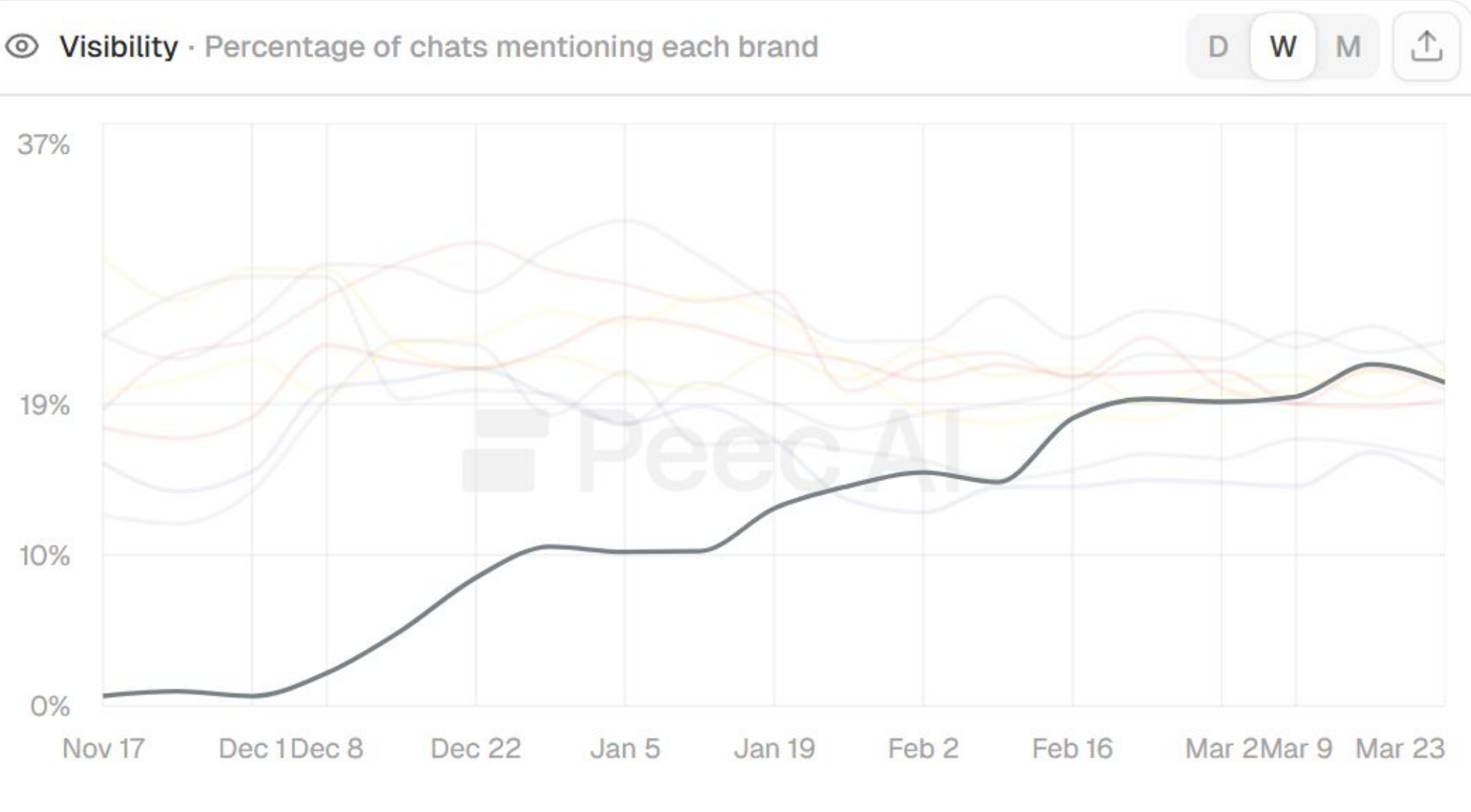
The increased visibility grew AI conversions from 0.5% of total sales to 5%, a 10x increase in just a few months.
We’ve used these same techniques on other brands to achieve similar results. And by the end of this case study, you’ll have a clear picture of how to apply the same AI SEO approach to your business.
About Private Label MFG
Private Label MFG (PLM) is a San Francisco-based eCommerce store that’s been selling high-performance aftermarket car parts since 2005. Exhaust systems, engine components, suspension upgrades, and cold air intakes that are built for Hondas, Subarus, BMWs, Toyotas, and more.
They came to us because AI search wasn’t doing anything for them. Their post-purchase surveys showed only 0.5% of customers found PLM through ChatGPT or another AI assistant. For a brand selling to car enthusiasts who are constantly researching mods online, that number should have been a lot higher.
- Website: privatelabelmfg.com
- Products: Performance aftermarket car parts (exhaust, engine, suspension, interior)
- Platform: Shopify
- Location: San Francisco, CA
- Founded: San Francisco, CA
- Timeline: September 2024 to March 2025 (6 months)
AI SEO Strategy
Here’s the high-level overview of what we did. We’ll dive into each stage in more detail below.
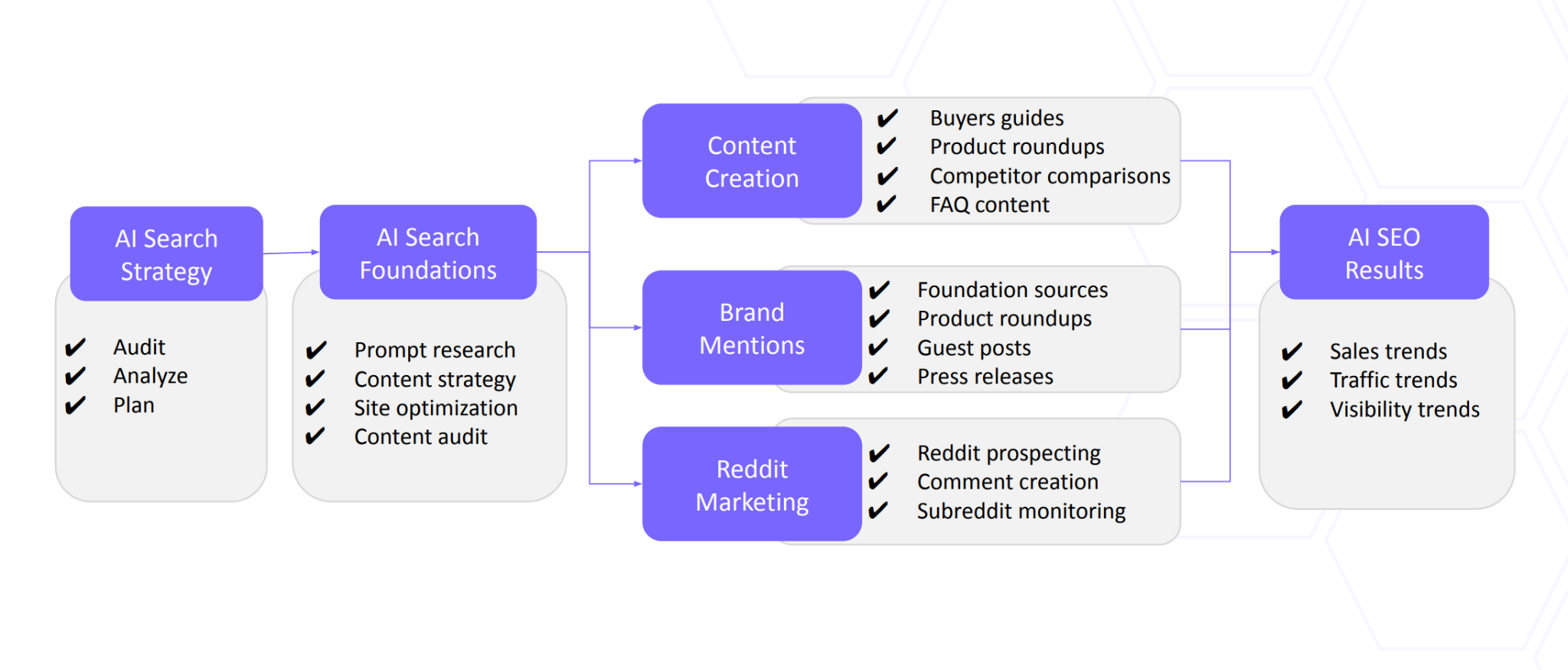
The plan we put together had four main pillars:
- AI Search Foundations – Optimizing the website to be more LLM-friendly so their key pages get cited more often.
- Content Creation – Creating content that AI assistants love to cite in order to shape the conversations around their products.
- Brand Mentions – Getting their products mentioned in the exact articles AI assistants use to recommend products.
- Reddit Marketing – Engaging in relevant Reddit threads that AI assistants are relying on for product recommendations.
Step 1 – AI Search Foundations
Before publishing a single piece of content, we made sure the foundational elements were in place. There were four main things we focused on.
- Prompt Research
- On-Page Optimization
- Creating a Dedicated FAQ Page
- Content Audit
Prompt Research
Just like how keyword research is the foundation of traditional SEO, prompt research is the foundation for AI search optimization.
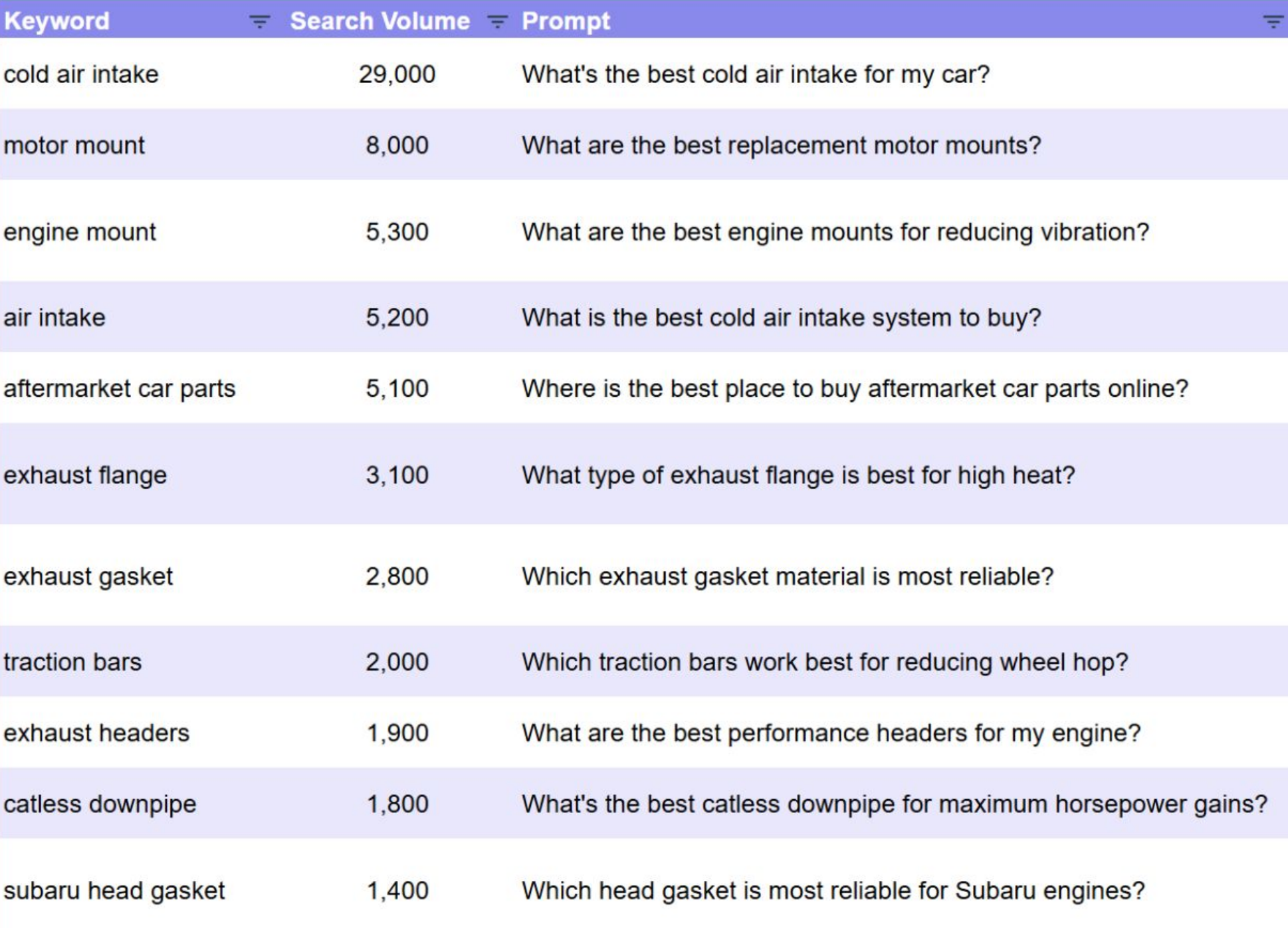
Here’s the challenge: there’s limited data on what people are actually typing into ChatGPT and other AI assistants. So we started with Google keyword data and worked backwards.
For example:
- “cold air intake” gets 29,000 monthly searches in Google. Someone searching for this is probably asking ChatGPT “What’s the best cold air intake for my car?”
- “Motor mount” with 8,000 monthly searches maps to “What are the best replacement motor mounts?”
Using Google search volume data is more grounded than just guessing prompts, because at least we know there’s actual search demand behind the prompts we’re targeting.
We used this approach to build a list of 100 prompts and loaded them into our prompt tracker for monitoring across ChatGPT, Perplexity, and Gemini.
On-Page Optimization
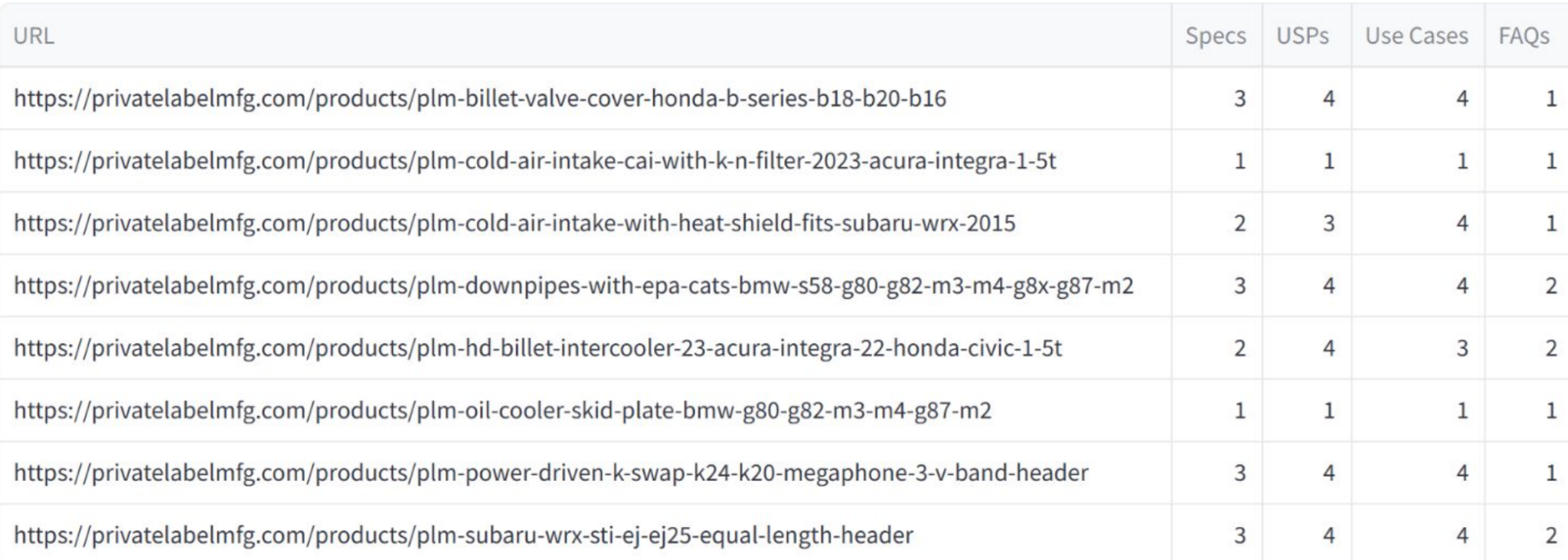
We reviewed PLM’s product pages and noticed most of them were thin on the exact information LLMs need to confidently recommend products.
For example, when someone asks “Which traction bars work best for reducing wheel hop on a Subaru WRX?”, the AI is looking for pages that clearly state important information like specs, materials, compatibility, unique selling points, and use cases.
If AI assistants are unable to find this type of key information, the product probably won’t get recommended.
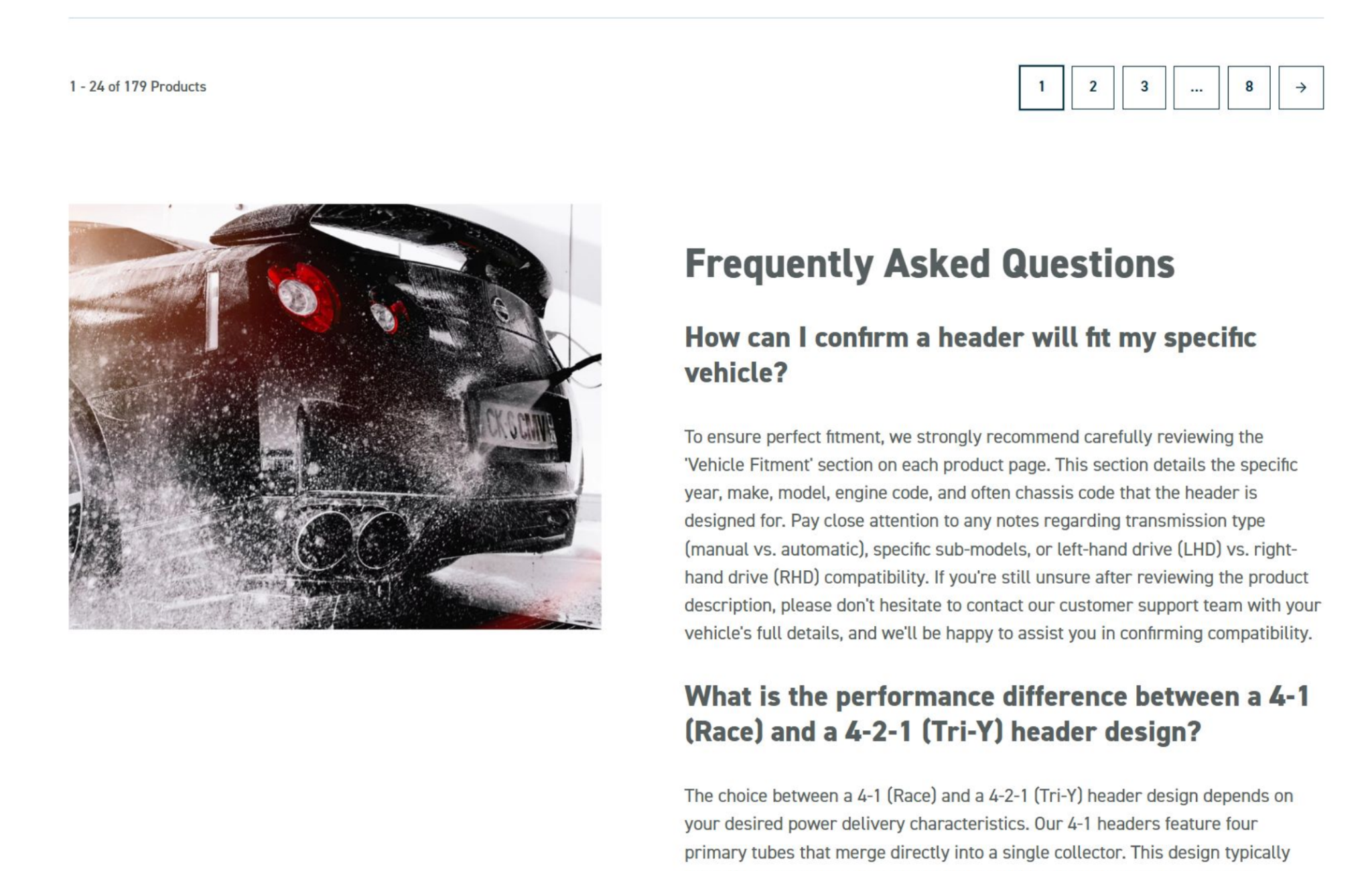
We assessed PLM’s most important products based on the following criteria:
- Specifications (dimensions, materials, weight, compatibility, etc.)
- Unique selling points
- Use cases (daily driver vs. track build vs. racing)
- FAQs specific to the product
Aside from product pages, we also added FAQ sections directly to the main collection pages. This Q&A structure maps naturally to how LLMs process and serve information.
Creating a Dedicated FAQ Page
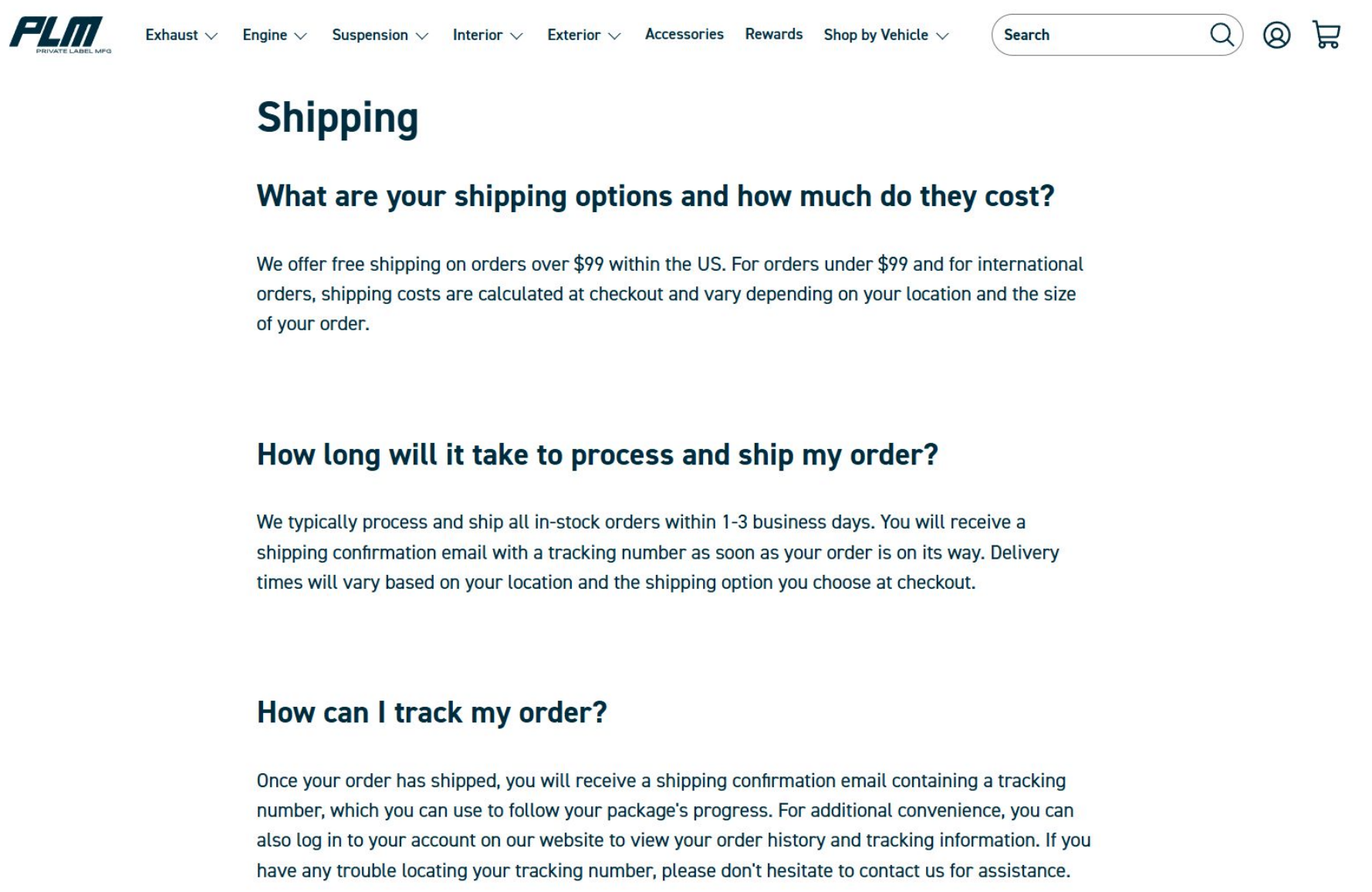
We created a consolidated FAQ page covering the high-level questions customers ask about PLM related to shipping, returns, warranty, checkout, coupon codes, etc.
LLMs are more likely to confidently recommend a brand when they have complete, easy-to-find information about how that brand operates.
Content Audit
Both traditional search engines and AI search engines favor sites that are tightly focused on a single topic. The narrower your topical footprint, the more authority you build in that specific space.
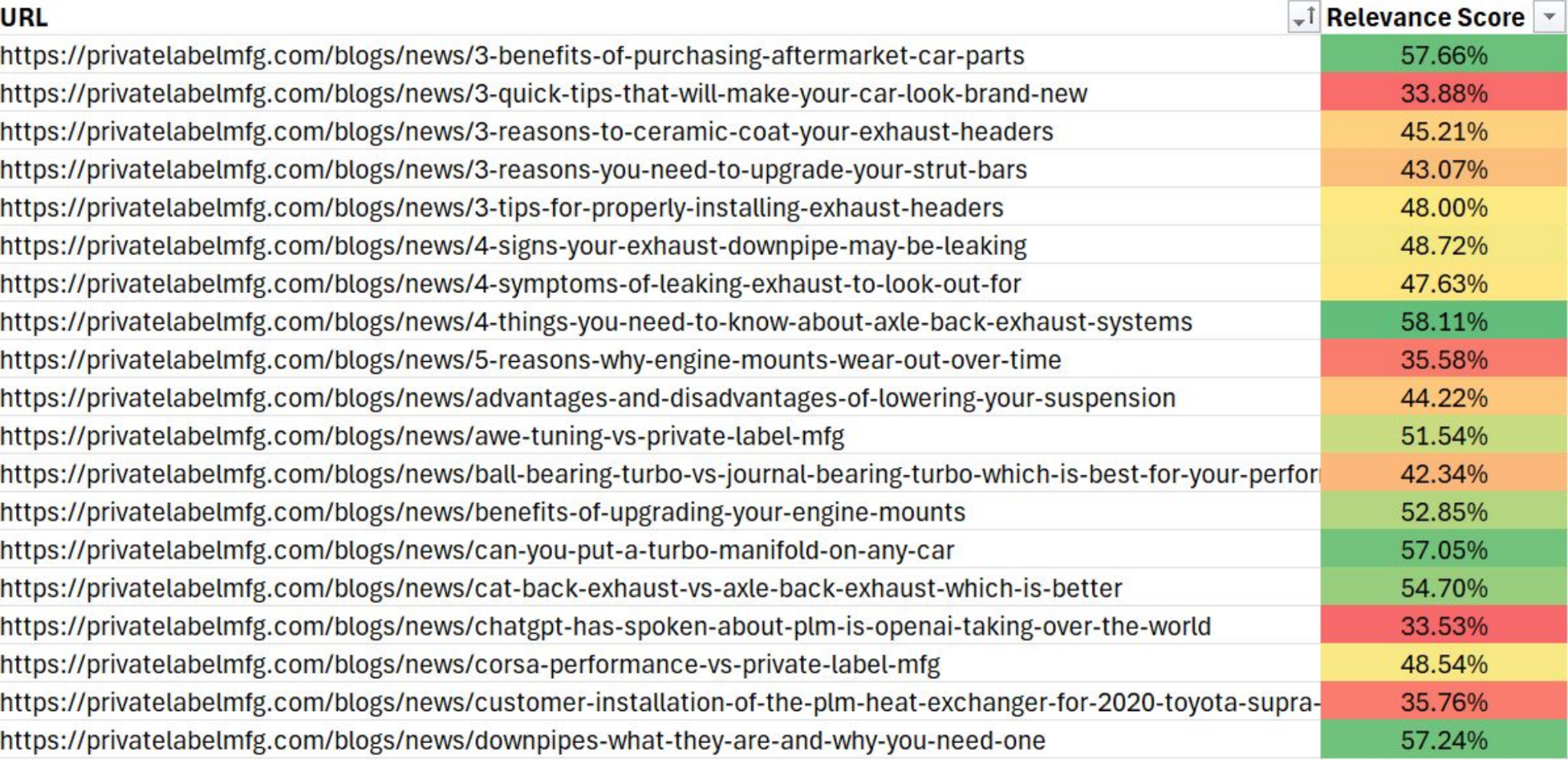
PLM had a solid content library, but some posts were only loosely connected to their core products. We scored every article on topical relevance and flagged the ones that were diluting the site’s core focus.
Removing less relevant content sent a clearer signal about what PLM actually specializes in.
Step 2 – Content Creation
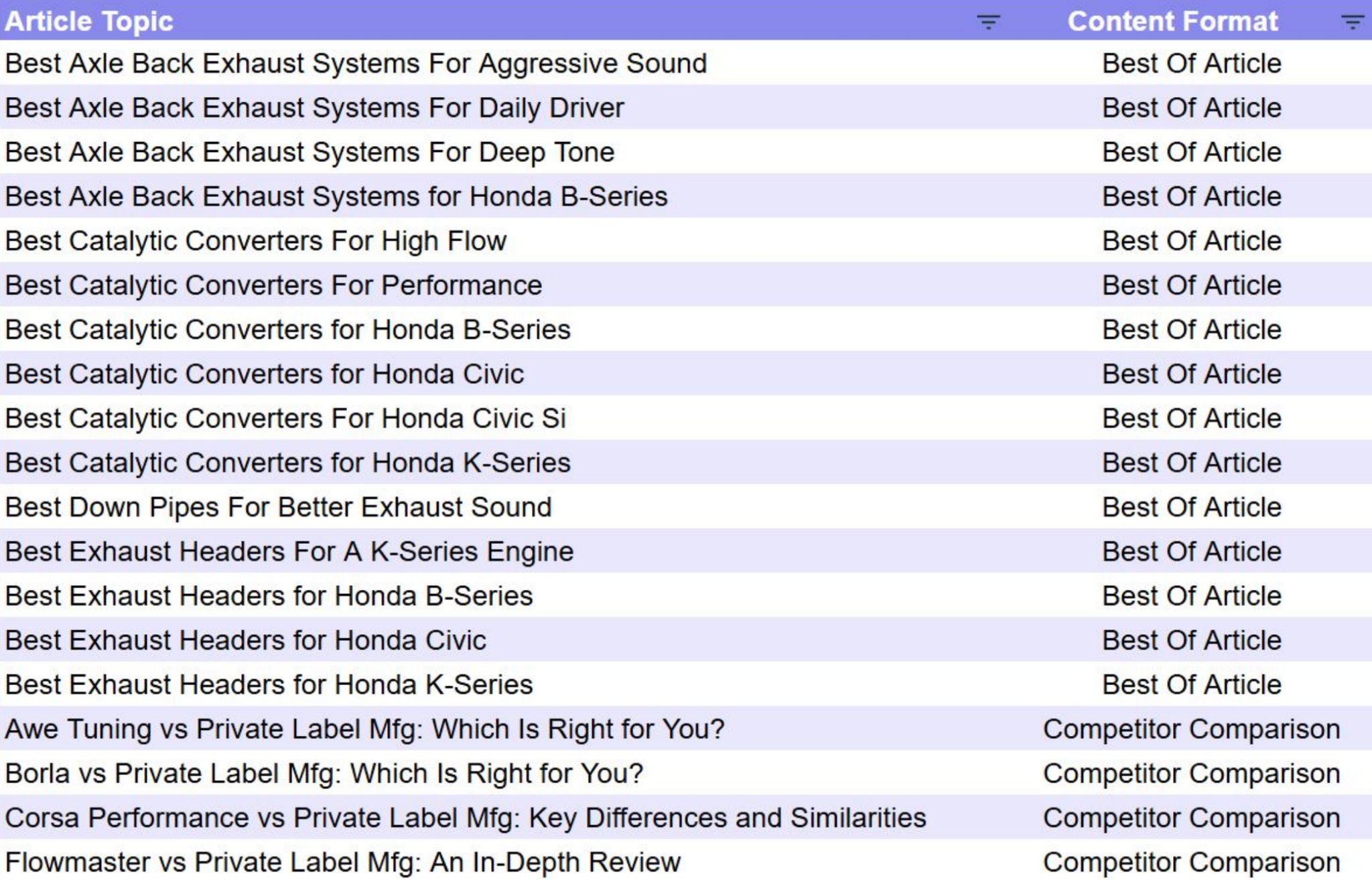
We noticed that ChatGPT and other AI assistants were consistently citing “Best of” articles and competitor comparison posts. We reverse engineered the AI responses to identify the exact topics that would have the best chance of being cited.
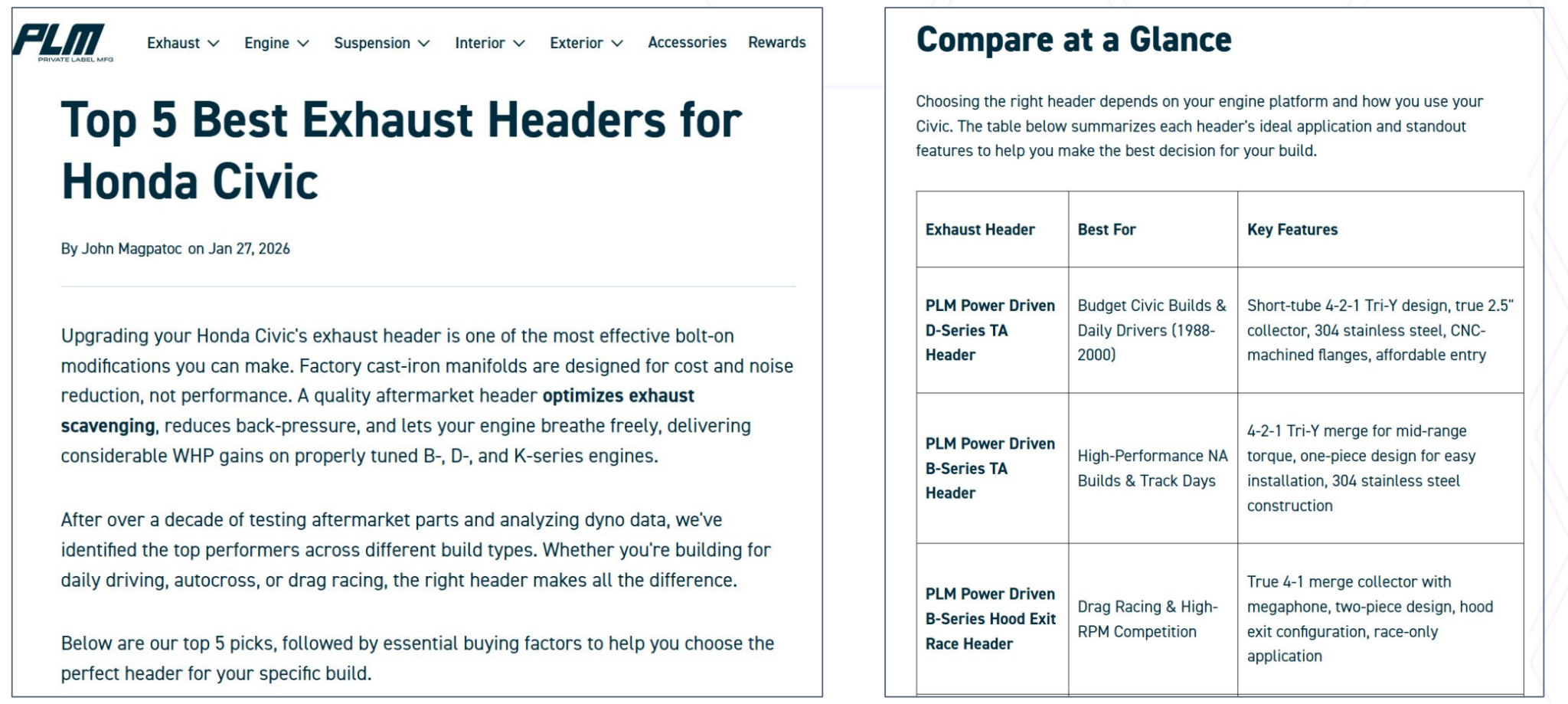
”Best Of” Articles
We created “best of” articles with comparison tables showing which products are best for which builds, what the key specs are, and who each option is right for.
PLM’s own products were included as the primary recommendations, with full specs, pricing, and application notes in the tables.
The goal was for these articles to get indexed and cited by LLMs, and for that content to start shaping AI recommendations around these products.
Competitor Comparisons
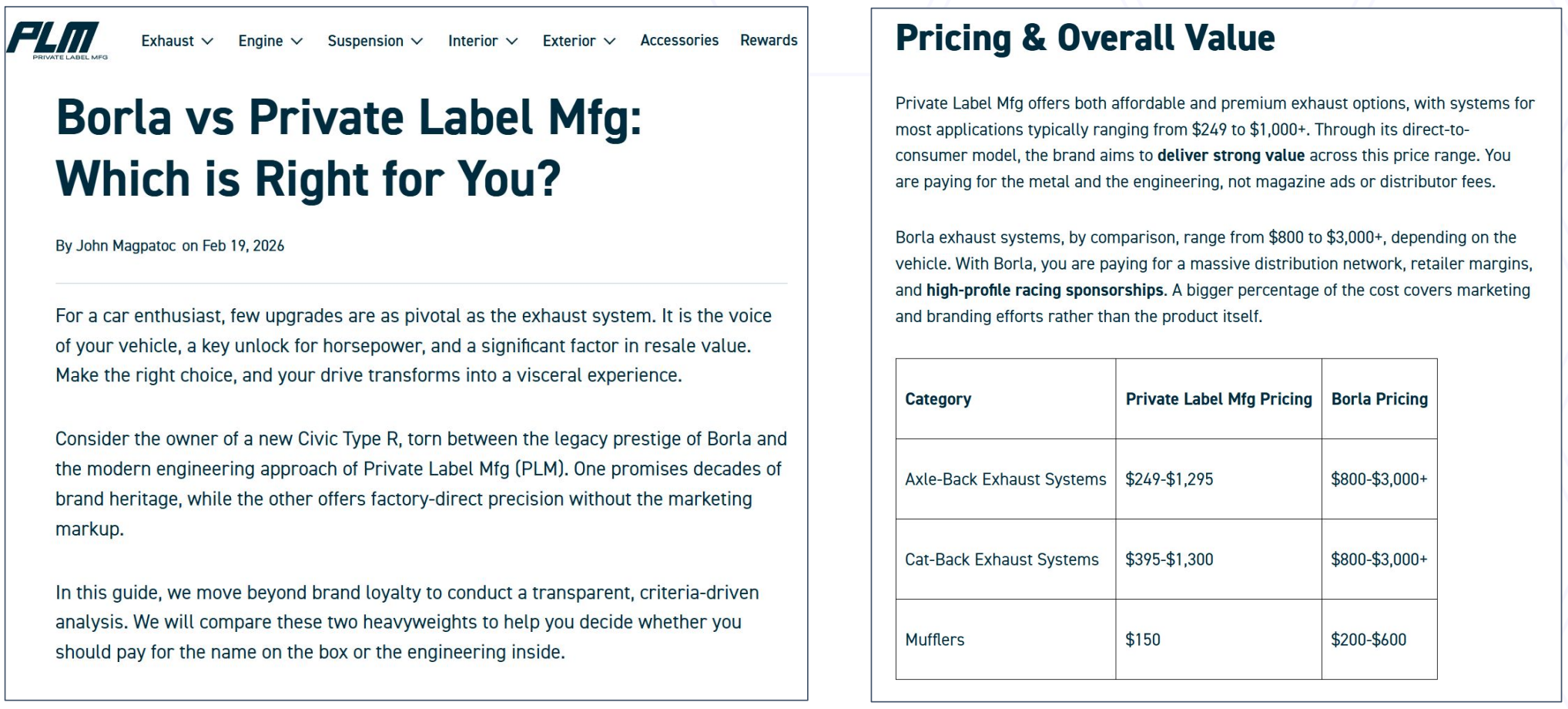
We also published articles that directly compared PLM to its main competitors. These types of topics map directly to the kinds of questions people ask AI assistants when they’re close to making a purchase.
The articles clearly laid out the differences in pricing, product range, and value proposition.
Content Optimization for AI Citation
Beyond format, we optimized the content itself to improve their citation rate. Many of our content optimization recommendations are based on an interesting study by Princeton that uncovered how to get content cited more often. For example:
- Including expert quotes increases citation likelihood by ~30%
- Incorporating quantitative statistics improves citation frequency by ~27%
- Using simple, clear language (Wikipedia-style) improves it by ~22%
- Citing sources within the content helps by ~20%
Also, we’ve found structuring the content in an FAQ format with questions for subheadings can also positively impact citation rate.
Step 3 – Brand Mentions
With AI SEO, the currency isn’t backlinks. It’s brand mentions.
For example, Ahrefs ran a fascinating study of 75,000 brands and found that the more brand mentions in more places on the web (with positive context) equates to more recommendations by AI assistants.
We built PLM’s brand mention footprint through four strategies.
1. Press Release
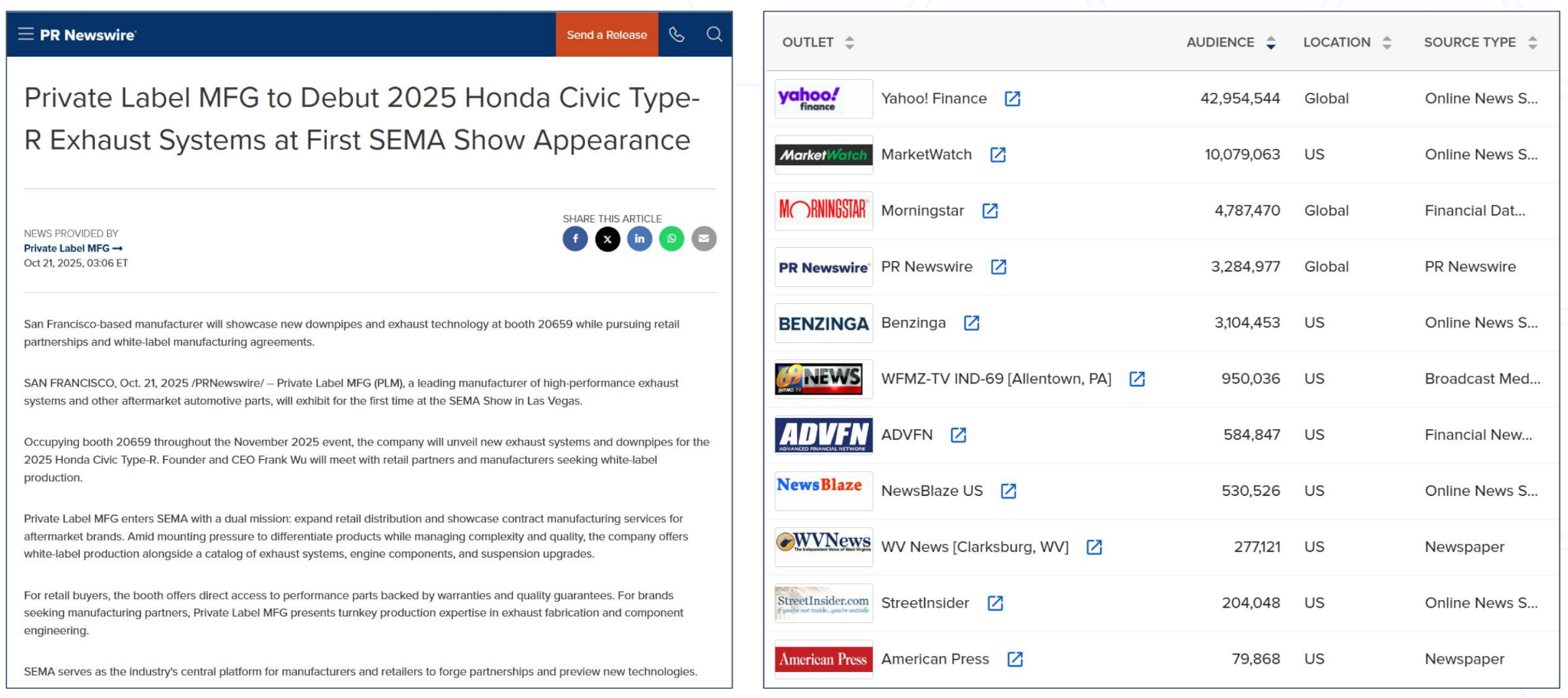
PLM was making their first appearance at the SEMA trade show in Las Vegas to showcase some new products for the 2025 Honda Civic Type-R. We wrote a press release about the event and distributed it to major media outlets.
After the distribution, the press release had earned 138 pickups, including Yahoo Finance, MarketWatch, Morningstar, Benzinga, and dozens of regional outlets. That’s 138 new branded web mentions that they didn’t have before.
2. Pitching Product Roundups
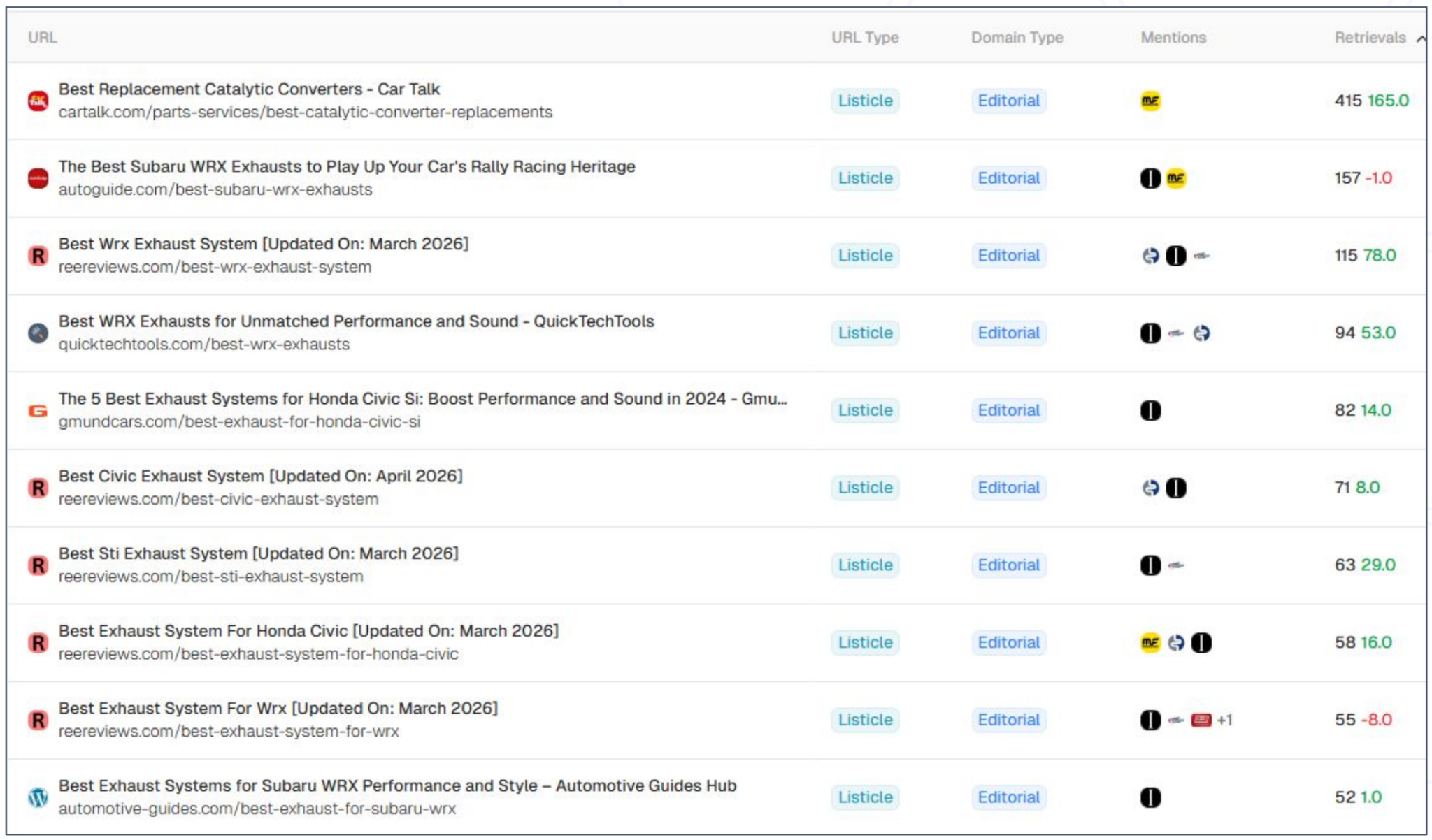
Getting included in third-party roundup articles that AI assistants are already citing is one of the most impactful ways to improve AI visibility.
Using our prompt tracking tools, we could see exactly which external articles were being cited most across our 100 tracked prompts.
We pitched PLM for inclusion in the most cited roundups. If ChatGPT is already pulling from a specific article to answer a specific question, getting your brand in that article increases your chances of being recommended.
3. Guest Posts and Sponsored Posts
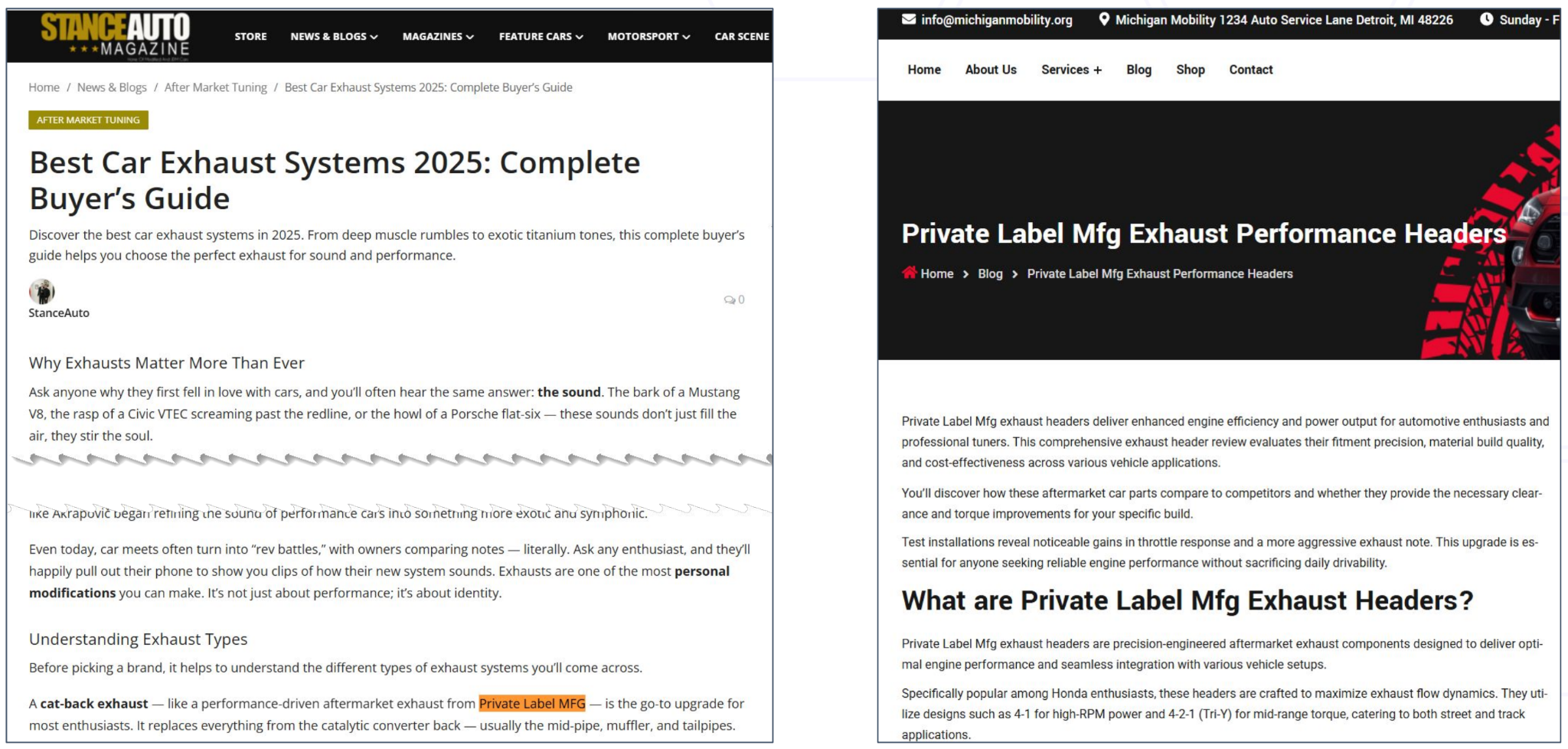
To further increase the number of brand mentions, we secured guest posts and sponsored articles on relevant automotive sites. The goal was to get these articles processed and cited by AI assistants, which could influence the products and brands they recommend.
4. Scholarship Campaign
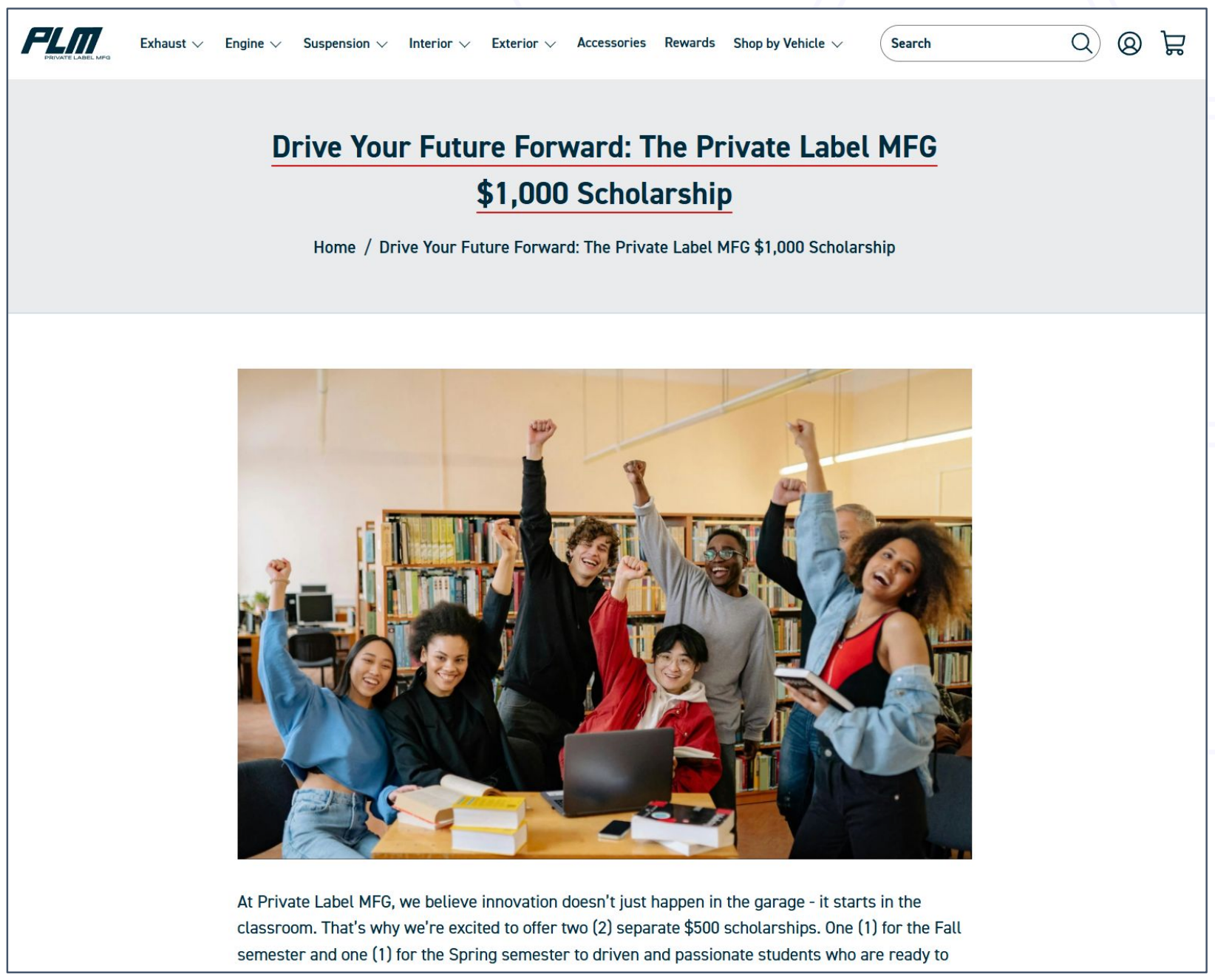
We created a $1,000 scholarship for university students and promoted it to universities and other financial aid websites. Every university that picked up the scholarship resulted in another brand mention, often with a brief description of what PLM does.
Step 4 – Reddit Marketing
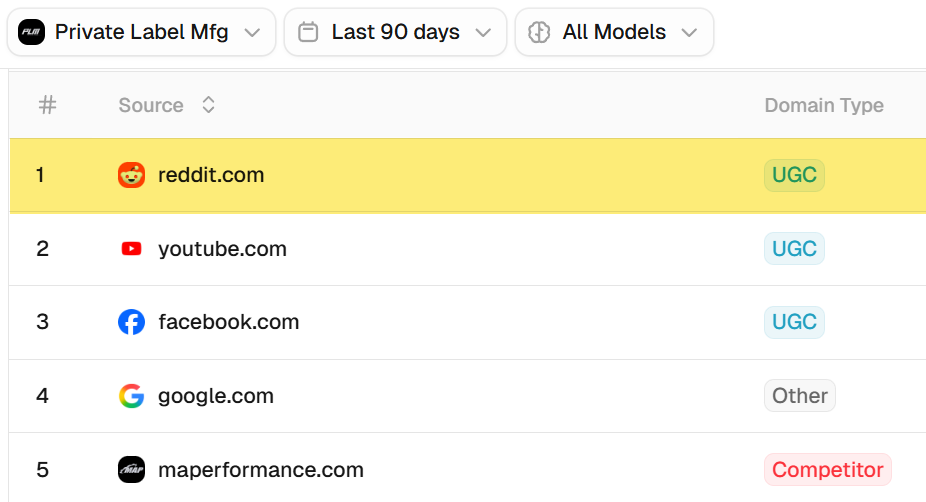
Reddit gets its own section because the data on this is hard to ignore. Across the 100 prompts we were tracking, reddit.com was the #1 most cited domain.
If you’ve been wondering why everyone in AI SEO keeps talking about Reddit, that’s the reason.
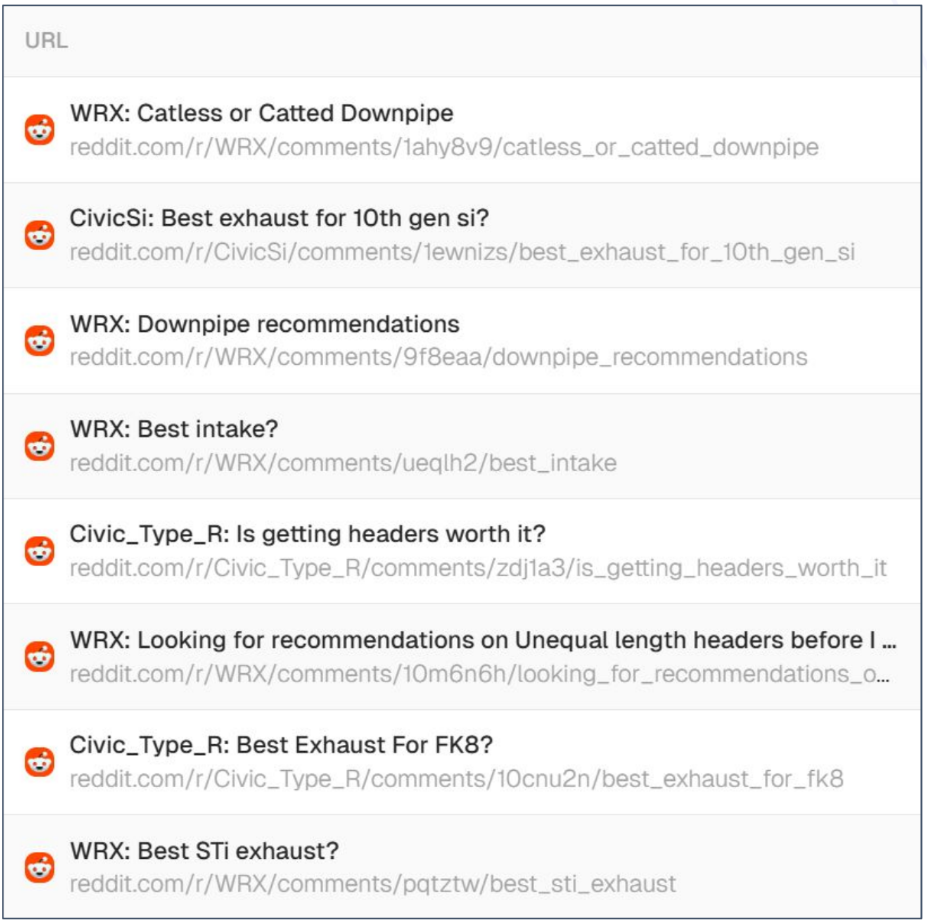
For PLM, there were active conversations happening where enthusiasts were asking exactly the questions we were tracking.
Over the course of 6 months, we published a total of 129 Reddit comments from aged, high-karma accounts.
6-Month Summary
Here’s what the campaign delivered:
- Optimized top category and product pages for AI search
- Cut less relevant articles to tighten topical focus
- Published 20 blog posts in AI-friendly formats
- Built 154 brand mentions from the press release, product roundups, guest posts, and the scholarship campaign
- Posted 129 Reddit comments in relevant Subreddits
AI SEO Campaign Results
As you can tell, there was a lot of work that went into the AI SEO campaign. So what about the results?
Revenue: +344% AI Referral Revenue
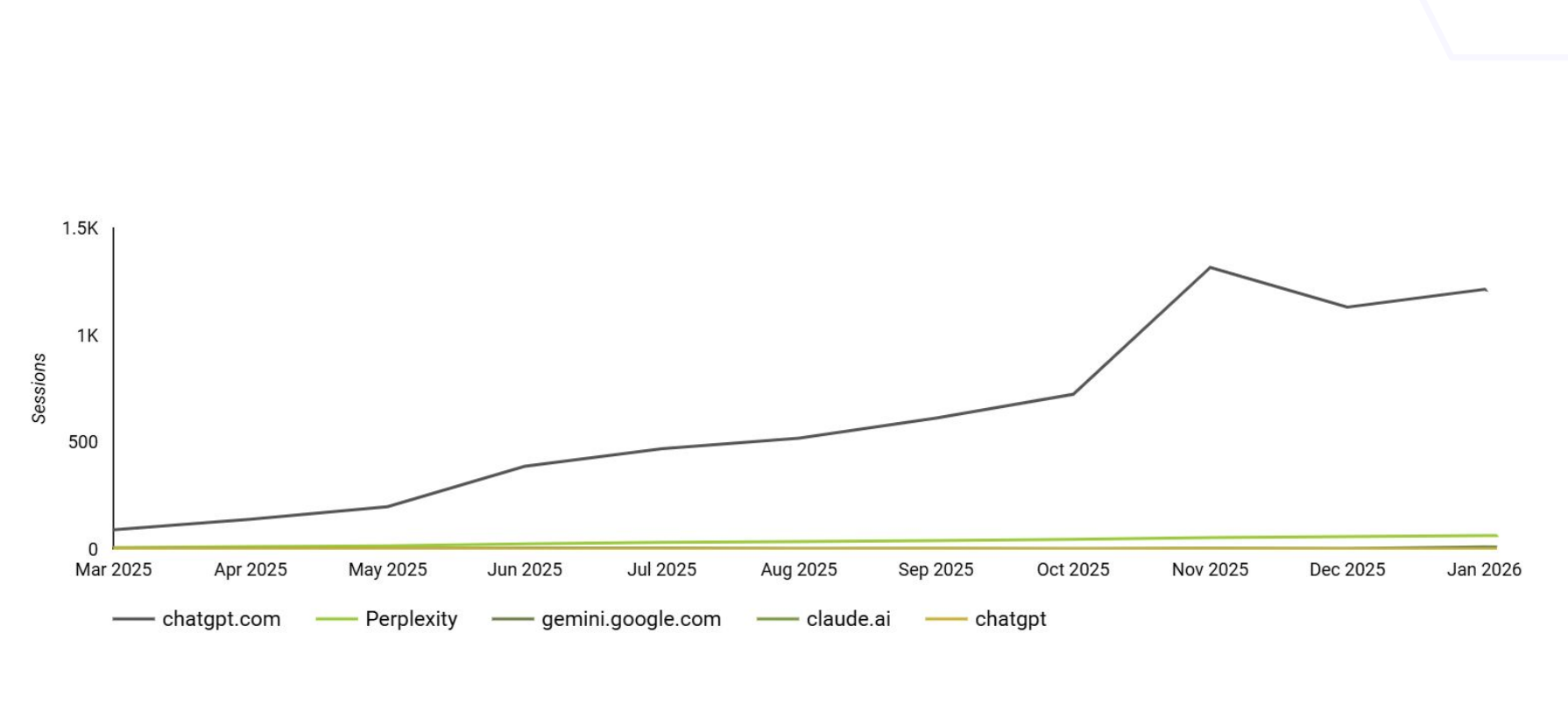
GA4 showed AI referral revenue up 344% over the course of the campaign. ChatGPT accounted for 94.6% of AI referral sessions, with Perplexity and Gemini making up the rest.
Just keep in mind that GA4 only captures customers who actually clicked a link directly from an AI tool. It doesn’t capture customers who used ChatGPT to research a product and then navigated to PLM separately. For this reason, post-purchase surveys asking customers “how did you hear about us” can give a much better picture of actual AI search conversions.
Post-Purchase Surveys: 0.5% to 5%
PLM used the SEA Post Purchase Survey app on Shopify to ask customers how they found the brand. Submissions citing “ChatGPT, Perplexity, or another AI assistant” went from 0.5% to 5% over the campaign. A 10x increase.
AI search went from a rounding error to a meaningful revenue channel in a few months.
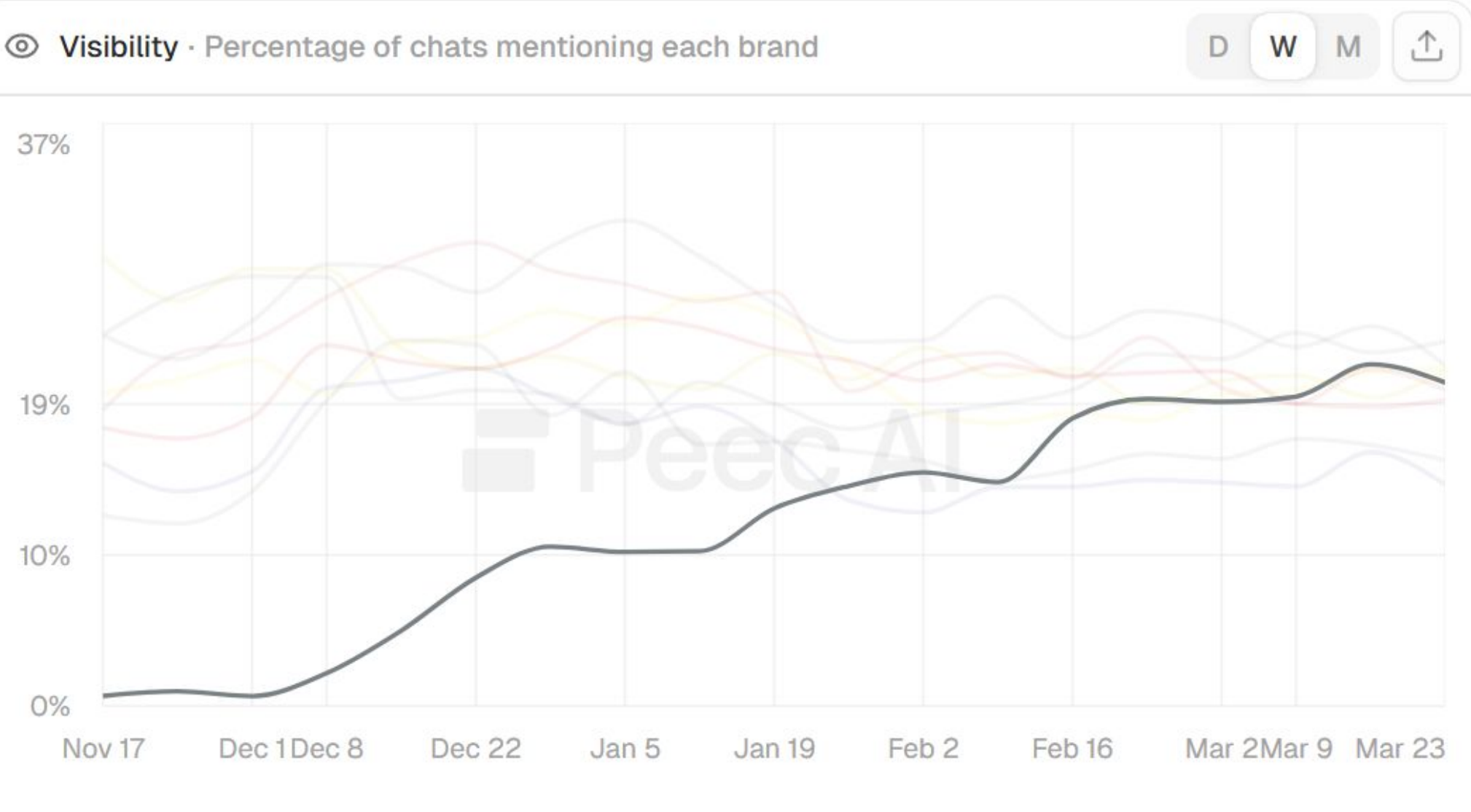
AI Visibility: 1% to 20%
PLM started the campaign being recommended only 1% of the time for the AI prompts they were targeting. By the end, they were being recommended in more than 20% of their 100 tracked prompts.
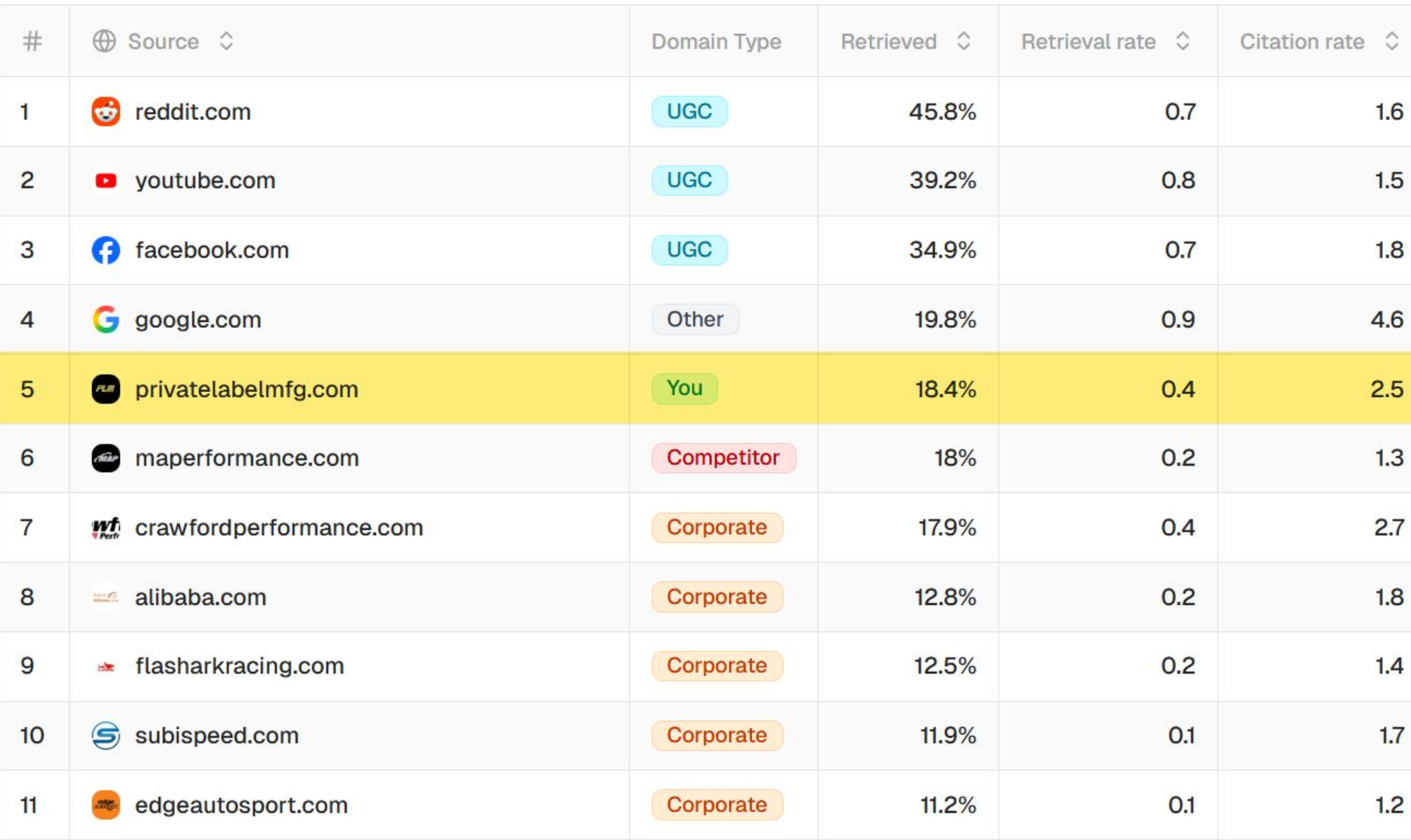
Citation Rate: 7% to 18.4%
“Citation rate” is the percentage of AI responses that cited a URL from privatelabelmfg.com. PLM’s citation rate went from 7% to 18.4%, which put them ahead of all their direct competitors.
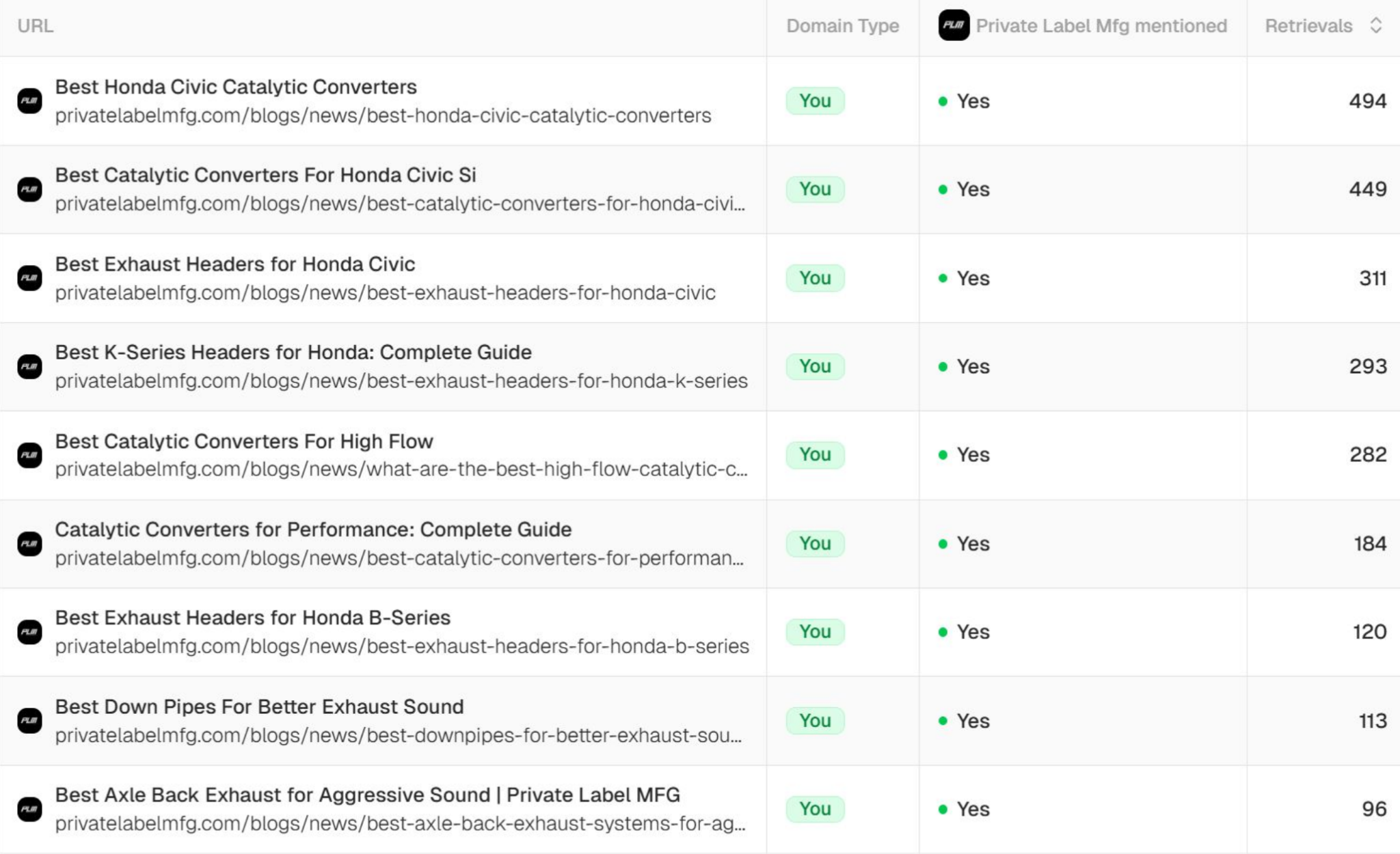
The articles doing the heavy lifting were the ones we had created, all of which were published within the previous 4 months.
There’s a common misconception that content needs time to age before it performs. What we’re seeing in AI search is the opposite. AI assistants have a very strong bias toward fresh content. New articles were getting cited 100’s of times within weeks of publishing.
Spillover to Traditional SEO
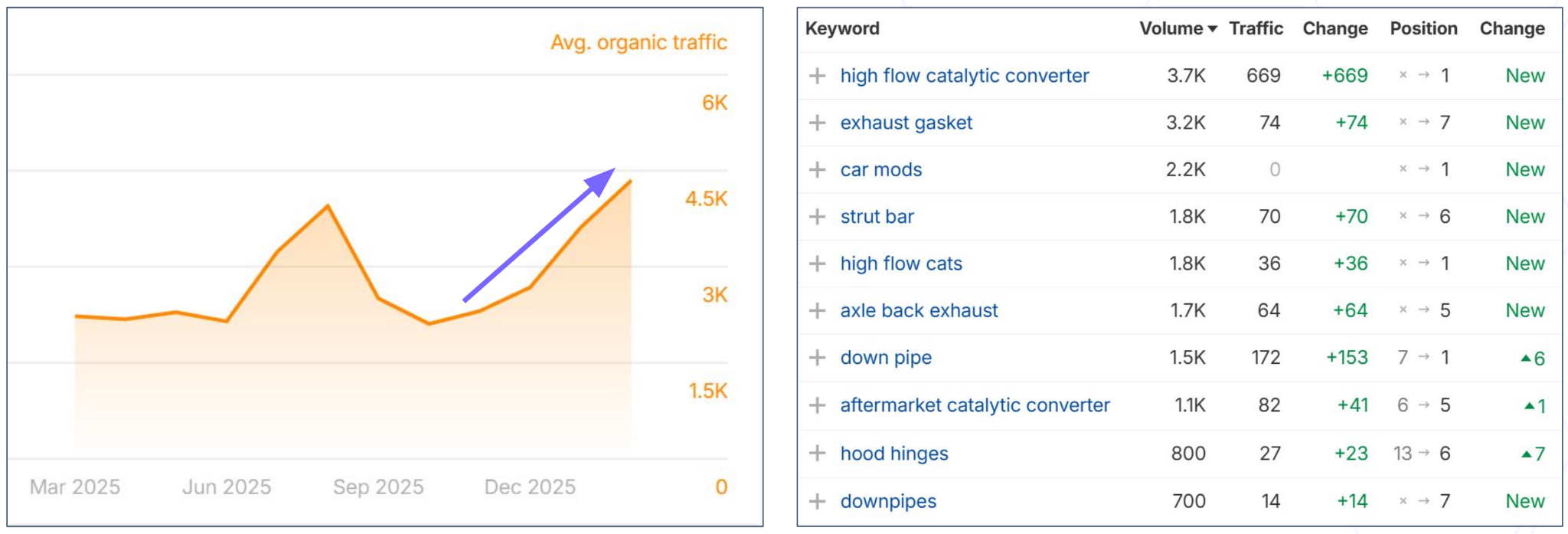
Even though we weren’t actively focused on traditional SEO, PLM’s organic rankings jumped up anyway. Many high volume keywords went from completely unranked to page 1, and in some cases position 1.
Key Takeaways
- Prompt research is the AI SEO equivalent of keyword research. Start by turning your existing Google keyword data into likely ChatGPT prompts. It’s more grounded than guessing.
- Thin product pages don’t get recommended. AI assistants need specs, USPs, compatibility, use cases, and FAQs to confidently recommend a product. If that information isn’t on the page, the products often get skipped.
- Fresh content gets cited quickly. AI assistants have a strong recency bias. New, well-structured content can start driving AI citations within weeks of publishing.
- Brand mentions are the #1 driver of AI recommendations. Get your brand mentioned in more places with positive context.
- A single press release can generate 100+ brand mentions fast. It doesn’t need to be big news. A trade show appearance is enough of a hook.
- Reddit is one of the most cited domains in ChatGPT. If your brand isn’t showing up in relevant Reddit threads, you’re leaving AI visibility on the table.
AI search is still a small slice of most stores’ overall revenue. But it grew 10x for PLM in 6 months and became a significant revenue source.